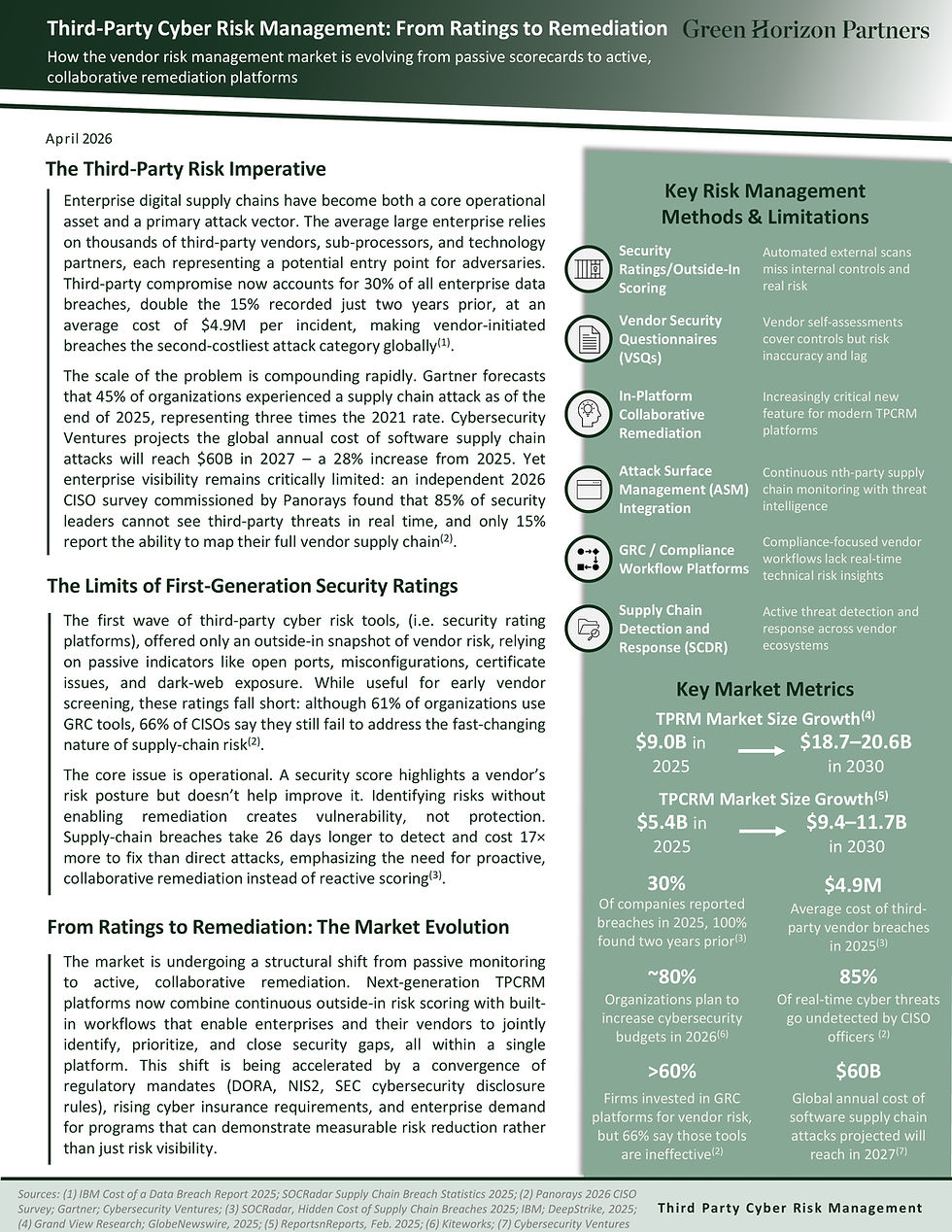
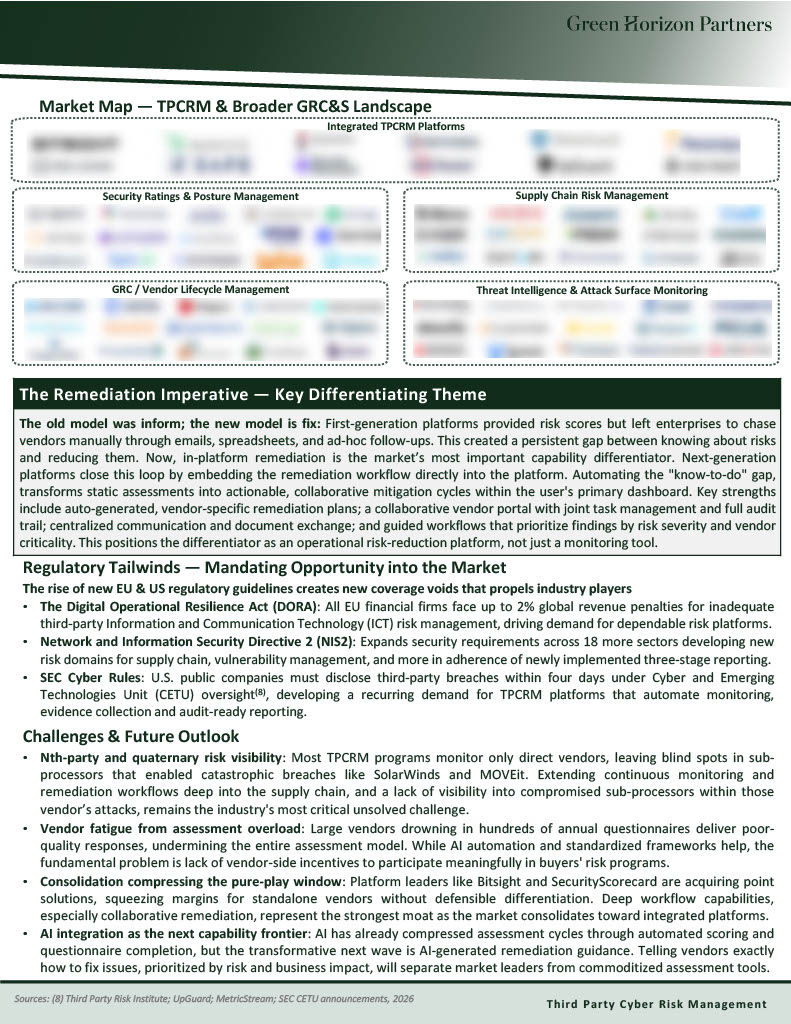
The shift from passive vendor ratings to collaborative remediation is the most important point here. External scores and questionnaires can identify exposure, but they do not prove that controls are operating or that findings are being closed. In an ISO 27001-aligned supplier risk program, organizations should map each vendor and critical sub-processor to applicable controls, evidence owners, review frequency, incident obligations, and time-bound corrective actions. That also makes fourth-party visibility and audit trails easier to defend under DORA, NIS2, and similar requirements. A practical ISO 27001 audit checklist for building that evidence trail: https://isochecklist.com/iso-27001


.png)


The shift from passive vendor ratings to collaborative remediation is the most important point here. External scores and questionnaires can identify exposure, but they do not prove that controls are operating or that findings are being closed. In an ISO 27001-aligned supplier risk program, organizations should map each vendor and critical sub-processor to applicable controls, evidence owners, review frequency, incident obligations, and time-bound corrective actions. That also makes fourth-party visibility and audit trails easier to defend under DORA, NIS2, and similar requirements. A practical ISO 27001 audit checklist for building that evidence trail: https://isochecklist.com/iso-27001